
Architectural drawings are the backbone of any construction project. They translate an architect’s vision into a tangible blueprint that guides builders and engineers. Among the various types of architectural drawings, floor plans, elevations, and section plans are essential for conveying the design and functionality of a structure. In this blog post, we’ll delve into each of these components, exploring their purposes and how they interconnect to create a cohesive architectural vision.
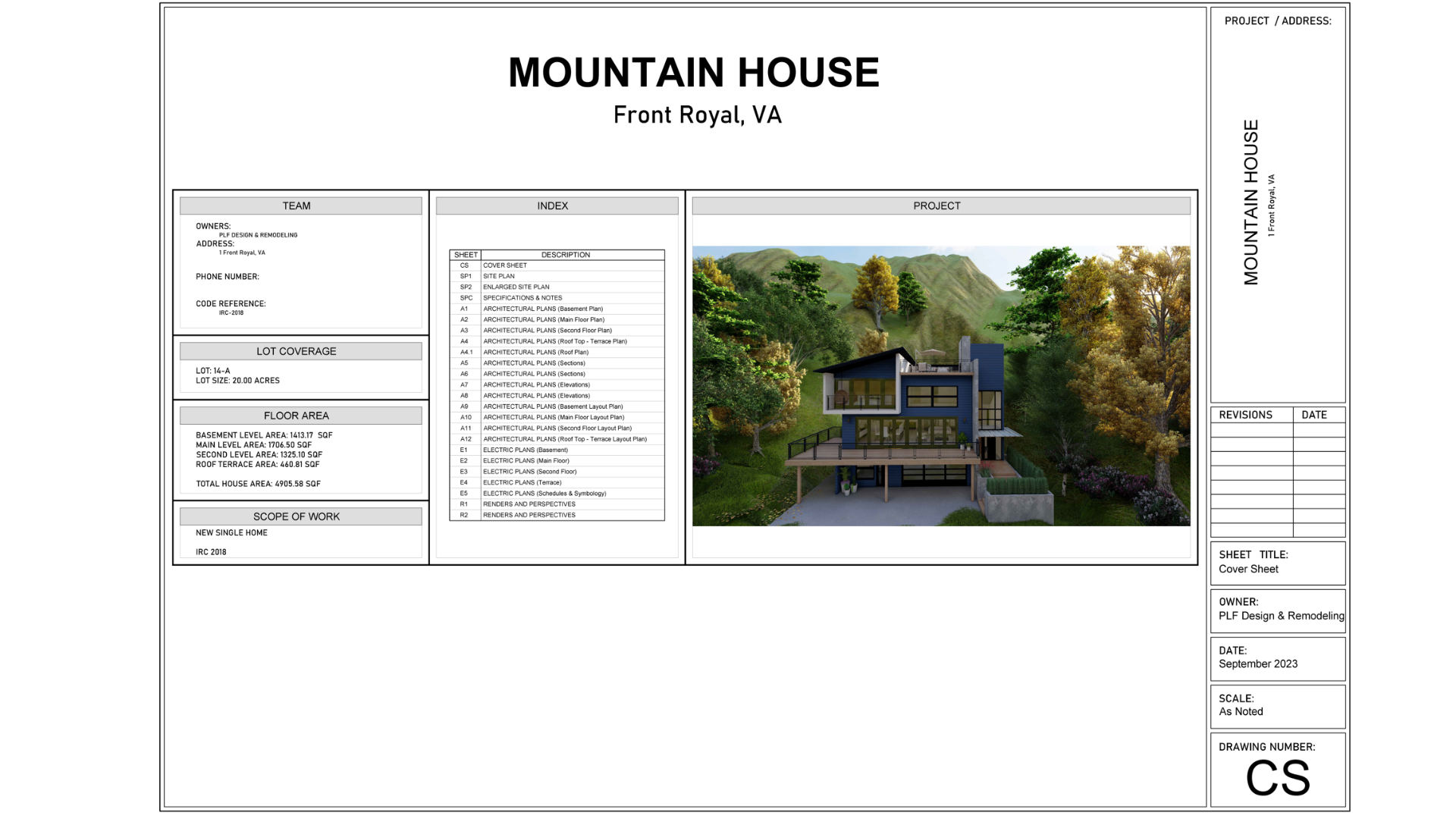
Floor Plans
A floor plan is a scaled diagram that represents the layout of a building from a bird’s-eye view. It illustrates the arrangement of rooms, walls, doors, and windows, providing a clear understanding of how spaces flow together.
Key Features of Floor Plans:
1- Room Dimensions: Accurate measurements ensure that each space is functional and adheres to building codes.
2- Furniture Layout: Many floor plans include suggested furniture arrangements to help visualize how the space will be used.
3- Circulation Paths: Effective floor plans show how people will move through the space, highlighting entrances, exits, and transitions between rooms.
Floor plans serve as a crucial communication tool for architects, clients, and builders, ensuring everyone shares a common understanding of the project.

Elevations
While floor plans provide a view from above, elevations show the exterior appearance of a building. They represent the vertical aspects of the design, detailing the facade and height of the structure from various angles.
What Elevations Include:
1- Exterior Materials: Elevations specify the materials used on the exterior, such as brick, wood, or glass, allowing clients to visualize the final look.
2- Window and Door Placement: They indicate where windows and doors are located, helping to assess natural light and accessibility.
3- Architectural Details: Elevations can highlight specific design elements like cornices, balconies, and roofing styles, enhancing the aesthetic appeal of the building.
By providing a detailed view of the building’s exterior, elevations play a vital role in ensuring the design aligns with the client’s vision and the surrounding environment.

Section Plans
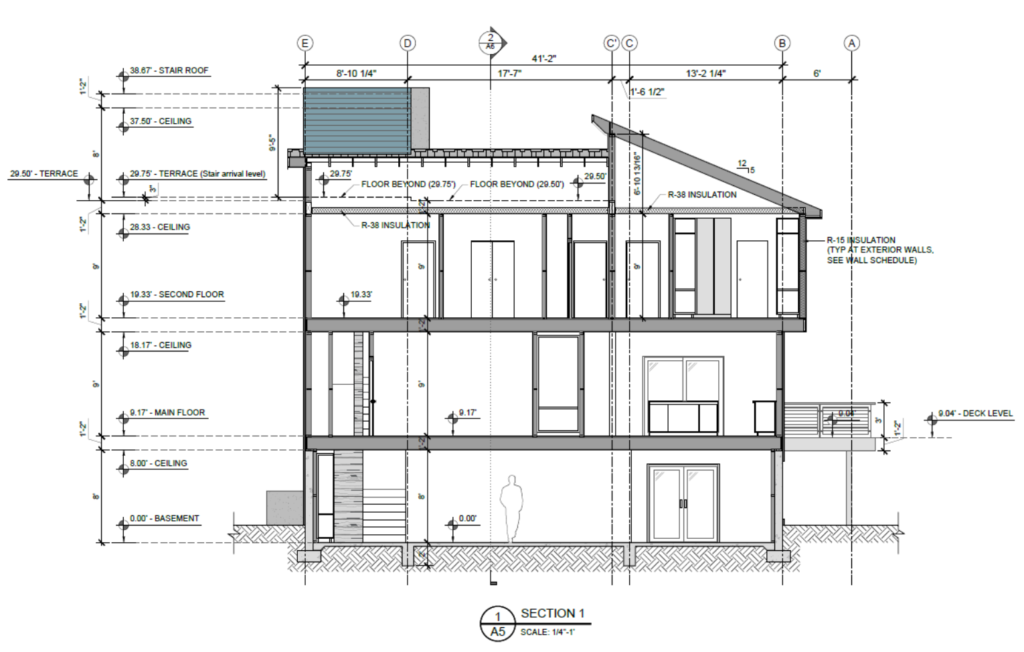
Section plans take the architectural drawing a step further by providing a cut-through view of the building. This perspective reveals the internal organization and spatial relationships between different levels and areas of the structure.
Insights from Section Plans:
1- Vertical Relationships: They show how different floors relate to one another, helping to illustrate ceiling heights and floor levels.
2- Structural Elements: Section plans often highlight important structural components, such as beams, columns, and stairs, essential for builders to understand load-bearing requirements.
3- Interior Spaces: These drawings can reveal the internal layout, including details like built-in furniture or variations in ceiling height that might not be apparent in floor plans.
Section plans are crucial for understanding the three-dimensional aspects of a building, allowing architects to visualize how spaces interact vertically as well as horizontally.
Architectural drawings are more than just technical illustrations; they are vital tools that help bring a building’s design to life. Understanding the nuances of floor plans, elevations, and section plans enables clients and stakeholders to engage with the design process more effectively. Whether you are an architect, builder, or simply an enthusiast, grasping these essential components of architectural drawings will enhance your appreciation of the intricate world of architecture.