
Designing a kitchen is not just about choosing beautiful materials and modern appliances — it’s about ensuring comfort, safety, and functionality. One of the most important aspects of kitchen design is providing enough space for circulation and for opening and using all appliances efficiently.
In this article, we’ll explain the minimum measurements that every kitchen should meet to guarantee an ergonomic and practical layout.
1. Circulation Space
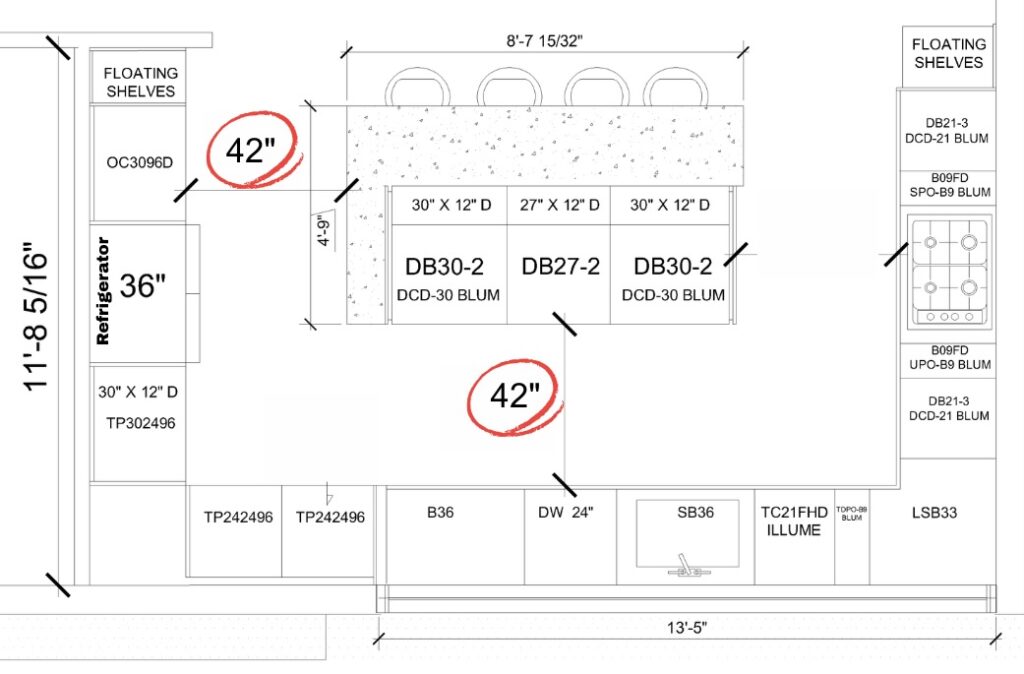
Proper circulation allows people to move around the kitchen safely and comfortably, even when multiple areas are being used at the same time.
- Main circulation path:
The minimum clear width for the main passage should be at least 36 inches.
If two people need to move around simultaneously, increase it to 48 inches. - Between opposite work areas (e.g., countertop and island):
Leave at least 40–48 inches of free space between two facing surfaces. This allows doors and drawers to open fully without obstruction. - Under-cabinet lighting and height:
Ensure a minimum of 20–24 inches between the countertop and upper cabinets for both visibility and comfort.
2. Space for Appliances
Each appliance requires enough room to open doors, load or unload items, and operate safely. Here are the minimum clearances recommended:
Refrigerator
- Leave at least 2 inches of space on the sides and top for ventilation.
- Make sure the door can open fully without hitting walls or cabinets — ideally 36 inches of free space in front.
Oven and Microwave
- Keep at least 24 inches of clearance in front of the oven door when open.
- Avoid placing the oven directly next to a wall or corner — leave at least 6 inches of side space.
Dishwasher
- Allow at least 36 inches of free space in front to load and unload comfortably.
- Place it near the sink for easy access to plumbing and efficient workflow.
Cooktop or Range
- Provide at least 16 inches of countertop space on one side and 12 inches on the other for preparation.
- Keep a minimum of 26 inches between the cooktop and the bottom of the range hood or cabinet above.
Sink
- The area in front of the sink should remain completely free — at least 36 inches of open space is ideal for comfortable use.
3. Practical Tips for Efficient Kitchen Design
- Plan work zones: Separate the preparation, cooking, and cleaning areas to create a natural workflow (the classic “kitchen triangle”).
- Use sliding or retractable doors in compact kitchens to save space.
- Avoid appliance overlap: Make sure doors and drawers can open simultaneously without interfering with each other.
- Think about accessibility: Handles and controls should be easy to reach for all users
A functional kitchen is built on smart spacing and circulation. By respecting these minimum dimensions, you ensure that every appliance can open and operate safely, while maintaining a comfortable flow throughout the room