
When planning a home renovation, it’s easy to focus on the bigger decisions—flooring, cabinetry, paint colors, and lighting. But sometimes, the smallest architectural details make the biggest difference.
Baseboards are one of those details.
Although they may seem like a simple finishing touch, baseboards play an important role in how a room looks and feels. They create a clean transition between walls and flooring, help protect walls from everyday wear, and contribute to the overall architectural style of your home.
Whether you’re remodeling a single room, finishing a basement, or updating your entire home, choosing the right baseboard style can make your space feel more cohesive and thoughtfully designed.
Let’s explore some of the most popular baseboard styles, materials, and design considerations to help you find the perfect fit.
1. Modern Flat Baseboards: Clean and Minimalist
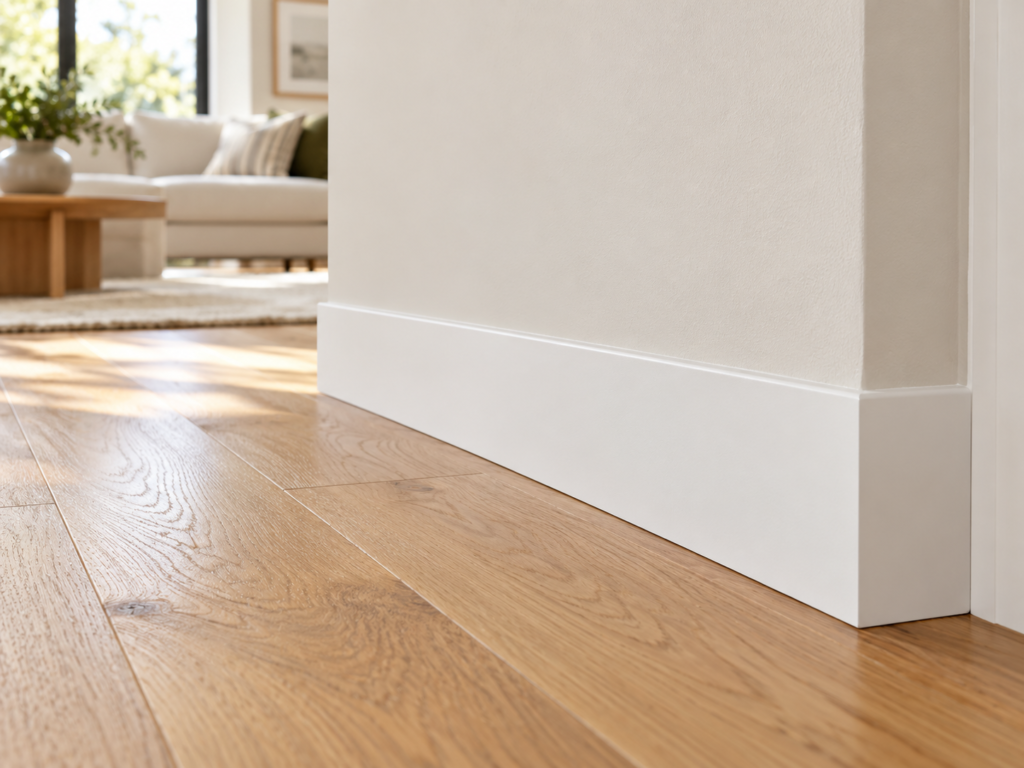
Modern flat baseboards feature a smooth, straight surface with minimal ornamentation. Their simple profile creates a streamlined appearance that complements contemporary interiors without drawing unnecessary attention.
Often installed in heights ranging from 3½ to 7 inches, flat baseboards can create a subtle finishing detail or make a stronger architectural statement, depending on their proportions.
Best for: Contemporary homes, minimalist interiors, modern basement renovations, and open-concept living spaces.
Design Tip: Pair taller flat baseboards with simple door casings and light-colored walls for a clean, sophisticated look.
2. Colonial Baseboards: Classic and Timeless
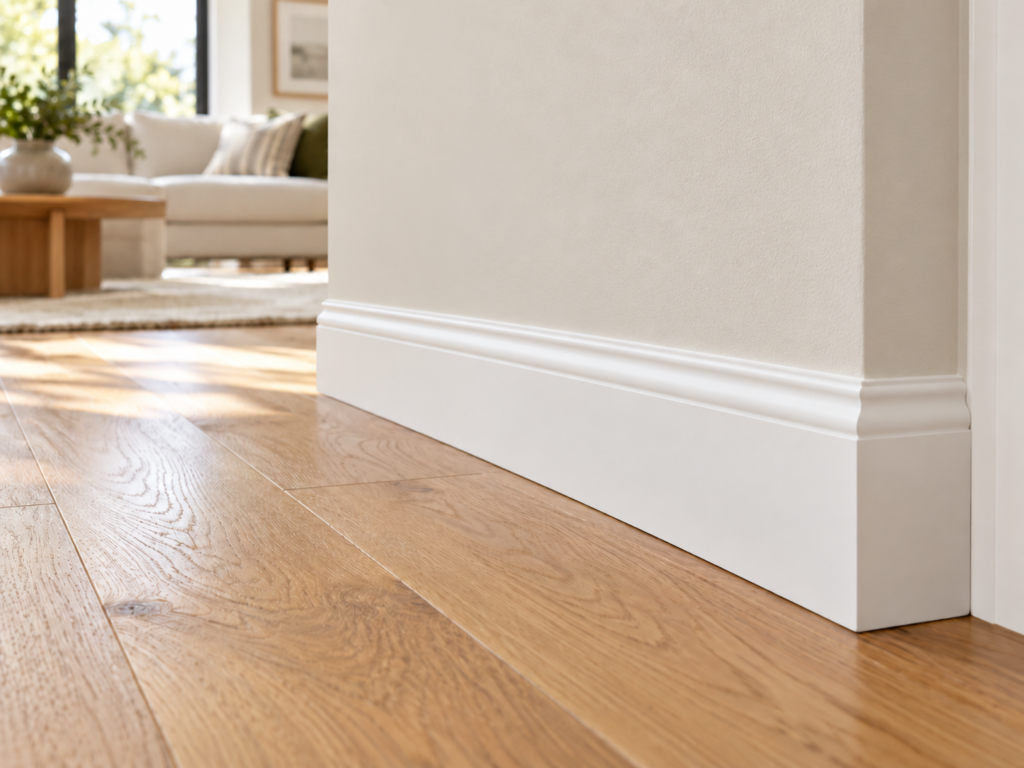
Colonial-style baseboards are a familiar choice in traditional American homes. They typically feature a flat lower section and a gently curved or decorative upper edge.
This subtle detailing adds character without overwhelming the room, making Colonial baseboards especially versatile for traditional and transitional interiors.
Best for: Colonial-style houses, traditional living rooms, bedrooms, hallways, and homes with classic architectural details.
Design Tip: When renovating an older home, consider matching the existing Colonial trim profile to maintain a consistent appearance between renovated and original spaces.
3. Craftsman Baseboards: Simple with Character
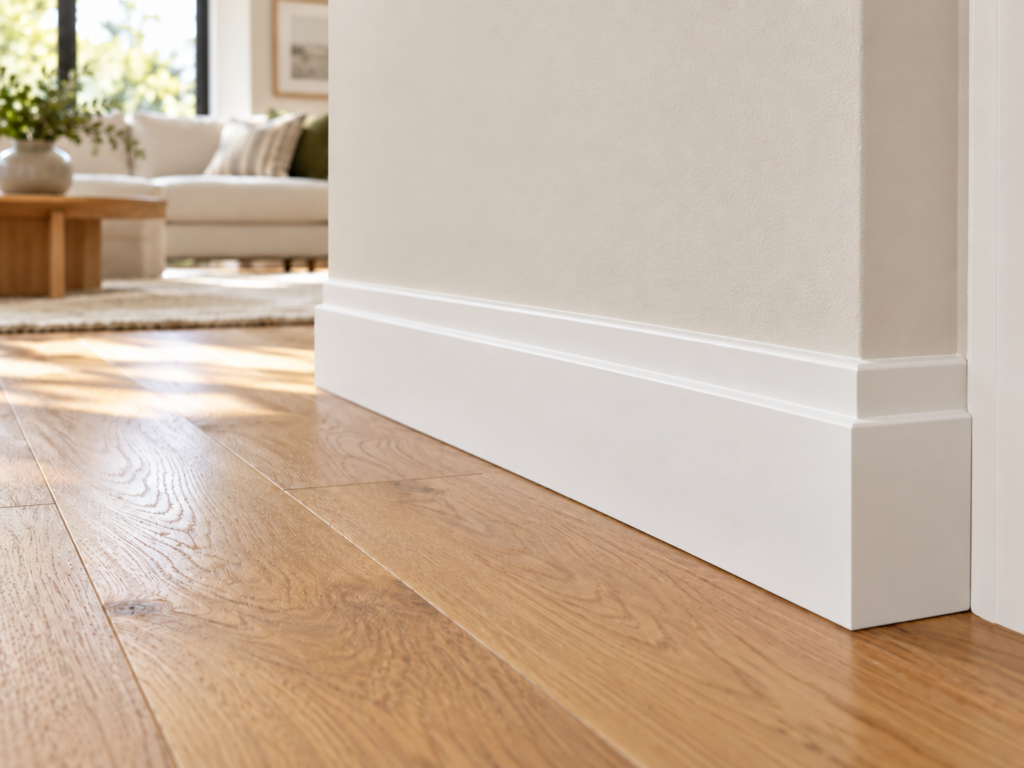
Craftsman-style baseboards emphasize clean lines, substantial proportions, and understated craftsmanship.
Usually featuring a flat face and square or slightly softened edges, these baseboards create a grounded, architectural look. They are especially effective when paired with simple door and window trim.
Best for: Craftsman homes, farmhouse interiors, transitional spaces, and renovations featuring natural materials.
Design Tip: Consider a 5½-inch flat baseboard paired with matching square-edge door casings for a cohesive Craftsman-inspired appearance.
4. Sculpted and Ogee Baseboards: Elegant and Traditional
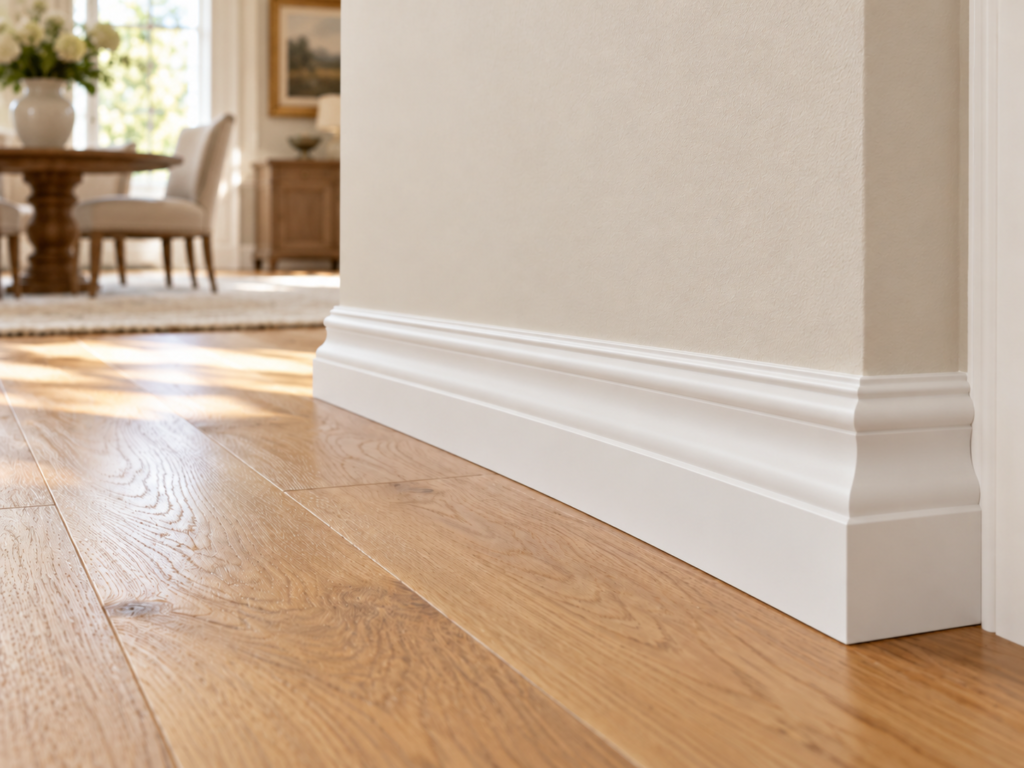
For homeowners who appreciate decorative architectural details, sculpted baseboards offer a more refined appearance.
These profiles incorporate curves, steps, and shaped upper edges. An ogee profile, for example, features a graceful S-shaped curve that adds depth and visual interest.
Decorative baseboards can work particularly well in formal living rooms, dining rooms, and traditional homes.
Best for: Elegant traditional interiors, formal rooms, classic architecture, and spaces with decorative crown molding.
Design Tip: Keep the level of detail consistent throughout the room. Ornate baseboards generally pair best with complementary door casings and other traditional millwork.
5. Stepped Baseboards: A Contemporary Twist
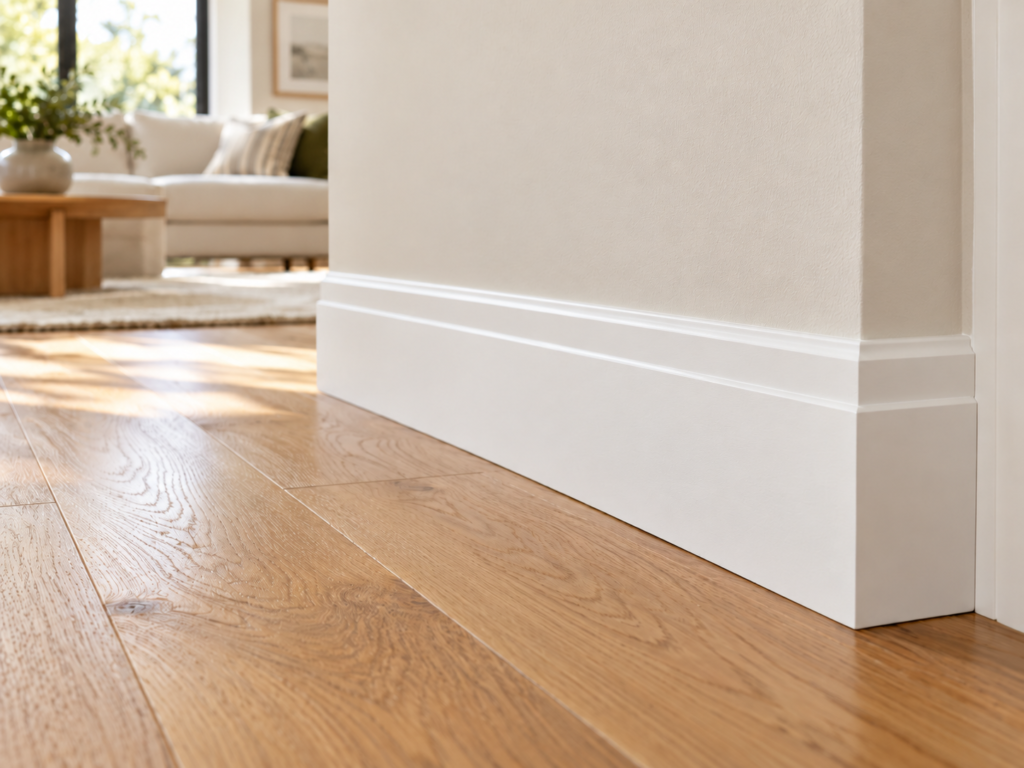
Stepped baseboards combine a relatively simple front surface with one or more defined changes in depth near the top.
These geometric details create subtle shadow lines, offering more visual interest than a completely flat profile without the elaborate curves of traditional molding.
Best for: Transitional homes, contemporary renovations, and interiors that balance modern and traditional elements.
Design Tip: Choose a restrained stepped profile when you want architectural definition while maintaining a clean, updated appearance.
6. Tall or Built-Up Baseboards: A Statement Detail
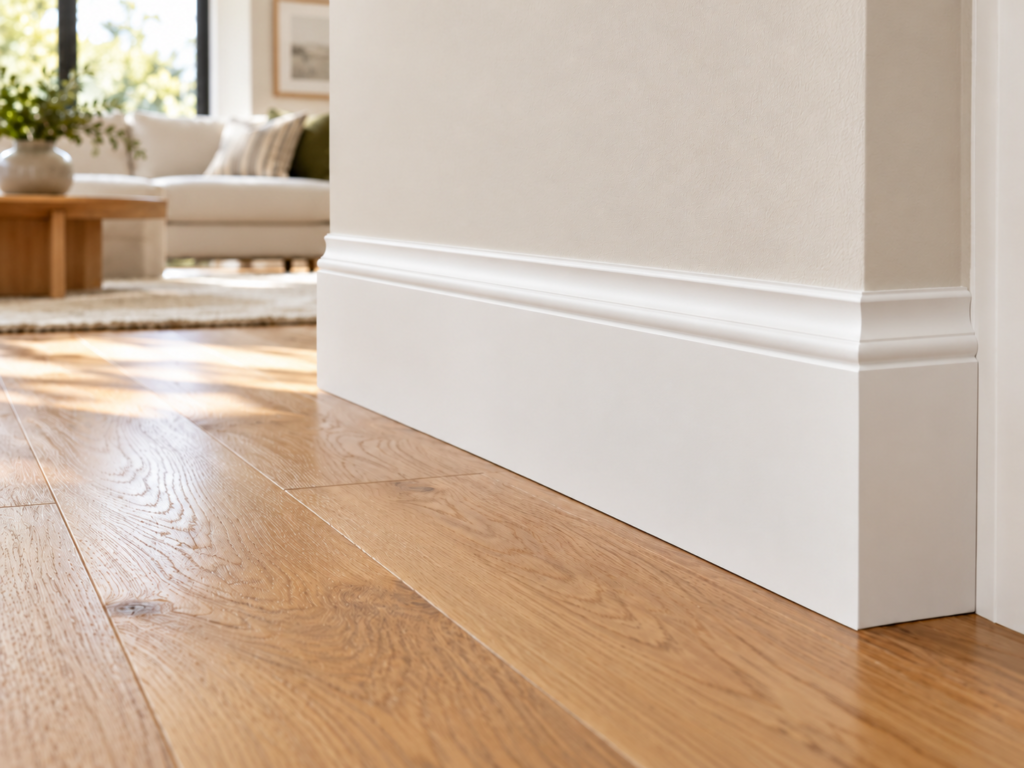
Tall baseboards can dramatically change the proportions of a room, especially when paired with higher ceilings.
Built-up baseboards often combine multiple trim pieces, such as a flat board, decorative base cap, and shoe molding, to create a more substantial architectural profile.
Rather than simply covering the wall-to-floor transition, they become an intentional design feature.
Best for: Spacious living areas, formal dining rooms, historic-inspired interiors, and homes with 9-foot ceilings or higher.
Design Tip: A taller baseboard doesn’t necessarily need an ornate profile. A 7¼-inch flat baseboard can make a beautiful statement in a modern interior.
The Finishing Details Matter
Even the most beautiful baseboard profile can lose its impact if the installation isn’t carefully executed.
Precise corner joints, smooth transitions, properly filled nail holes, clean caulking where appropriate, and a consistent paint finish all contribute to a professional result.
It’s also important to consider how the new baseboards will connect with existing door casings, flooring transitions, stairways, and other architectural elements.
These small decisions are what make a renovation feel complete.
Transform Your Home with Thoughtful Finishing Details
At PLF Design & Remodeling, we believe a successful renovation is about more than selecting beautiful finishes. It’s about creating spaces where every detail works together.
From basement finishing and bathroom renovations to complete interior remodeling, our team pays attention to the architectural details that bring a design together—including the trim that frames each room.
Whether you prefer the clean simplicity of modern baseboards or the timeless character of traditional molding, we can help you create a space that feels cohesive, functional, and beautifully finished.
Planning a home renovation in Northern Virginia?
Contact PLF Design & Remodeling to discuss your project and discover how thoughtful design and quality craftsmanship can transform your home.