
When planning a home renovation, interior doors are often overlooked. Yet they play an important role in how a home looks, feels, and functions. Beyond providing privacy, doors influence natural light, sound control, traffic flow, and the overall design of each room.
Whether you’re updating a single room, finishing a basement, or remodeling your entire home, choosing the right interior doors can make a noticeable difference.
From traditional panel doors to modern pocket doors, here’s a closer look at some of the most popular interior door styles, their advantages, and where they work best.
1- Panel Doors: A Timeless Choice
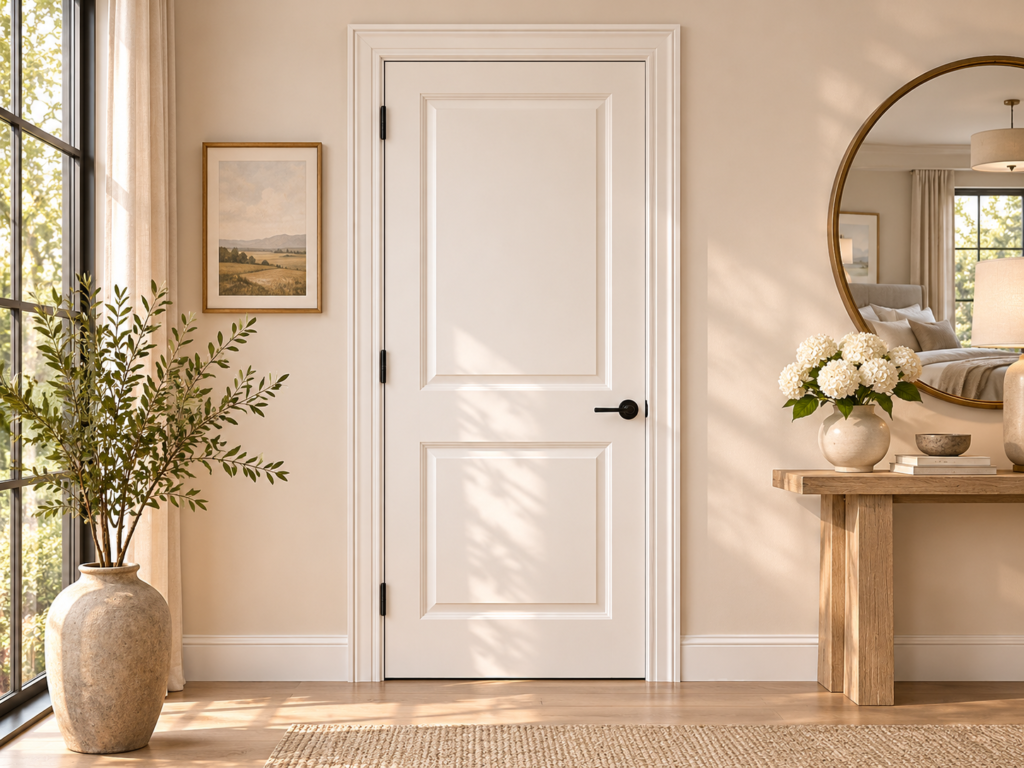
Panel doors are among the most commonly used interior doors in residential homes. They feature recessed or raised panels that add dimension and architectural character.
Popular configurations include two-panel, three-panel, four-panel, and six-panel designs. Shaker-style doors, particularly those with two simple recessed panels, are especially popular in transitional and contemporary homes.
Best for: Bedrooms, bathrooms, hallways, and home offices.
Why homeowners choose them: Panel doors are versatile, available in numerous finishes, and complement a wide range of architectural styles.
For a clean, cohesive appearance, consider using the same panel design throughout the home’s main living areas.
2- French Doors: Elegance and Natural Light
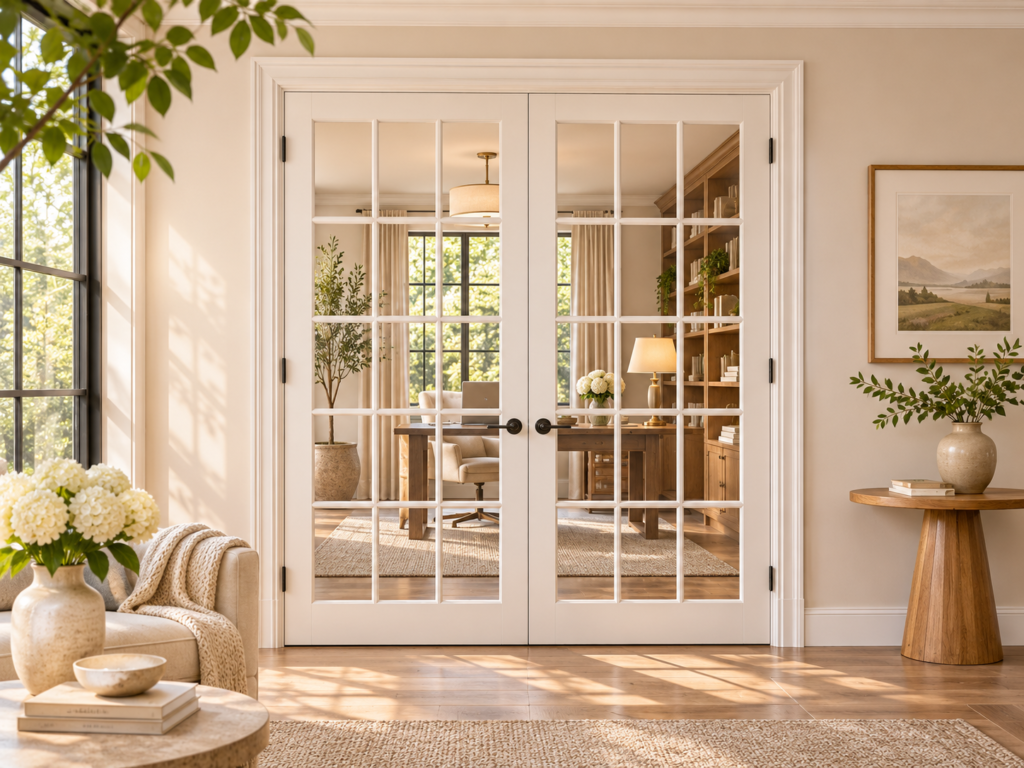
French doors feature glass panels framed in wood, fiberglass, or other materials. Although traditionally installed in pairs, single French doors are also available.
Their biggest advantage is the ability to visually connect two rooms while maintaining a physical separation.
French doors can help natural light travel between adjoining spaces, making them particularly appealing in rooms that might otherwise feel enclosed.
Best for: Home offices, dining rooms, libraries, and living rooms.
Why homeowners choose them: They create an elegant architectural feature while preserving openness and light.
For spaces requiring additional privacy, frosted or textured glass offers an alternative to clear glass.
3- Pocket Doors: A Smart Space-Saving Solution
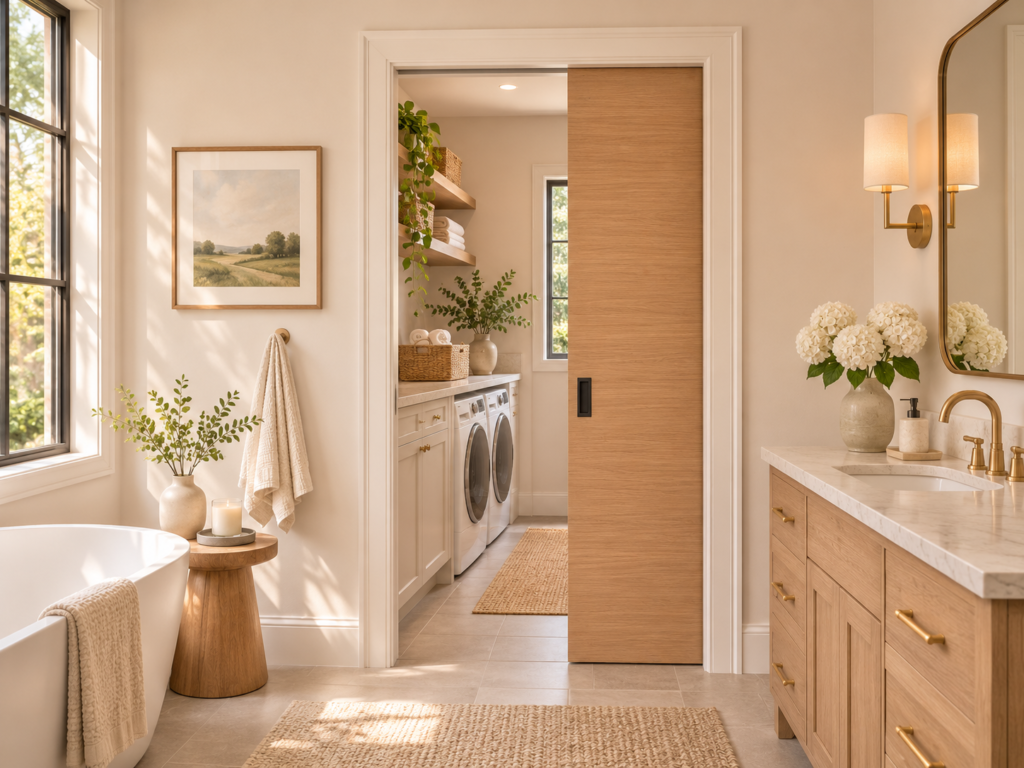
Pocket doors slide into a concealed compartment within the wall instead of swinging outward or inward.
Because they eliminate the need for traditional door-swing clearance, they’re particularly useful in compact spaces where every inch matters.
A pocket door can make it easier to accommodate cabinetry, furniture, and bathroom fixtures near an opening.
Best for: Small bathrooms, laundry rooms, walk-in closets, and compact home offices.
Why homeowners choose them: They improve space efficiency without compromising the overall design.
However, pocket doors require sufficient wall space for the door cavity. Electrical wiring, plumbing, and structural framing may affect installation, especially during a renovation.
4- Barn Doors: A Distinctive Design Feature
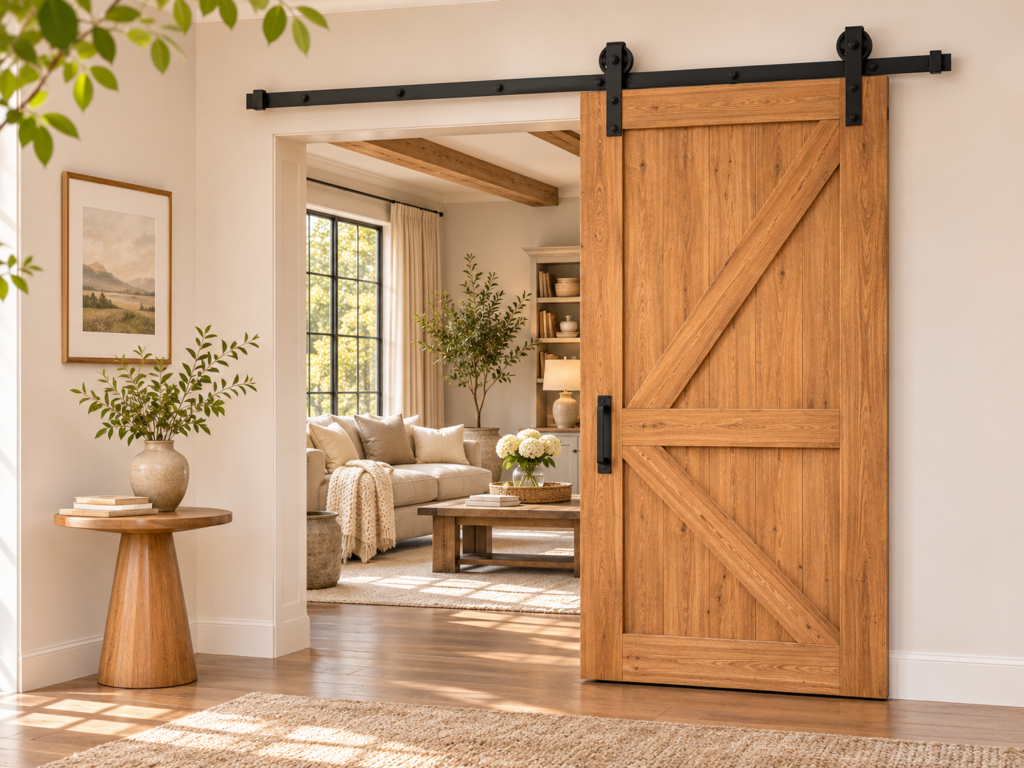
Barn doors have become a popular feature in farmhouse, rustic, and transitional interiors.
Mounted on an exposed track above the doorway, these doors slide horizontally along the wall.
While natural wood remains a popular option, modern barn doors are also available in painted finishes, glass, and minimalist flat-panel designs.
Best for: Home offices, pantries, family rooms, and decorative room transitions.
Why homeowners choose them: They create an eye-catching focal point and eliminate the need for a swinging door.
One important consideration is privacy. Because most barn doors do not seal tightly around the opening, they generally provide less sound isolation and privacy than traditional hinged doors.
They also require unobstructed wall space beside the doorway.
5- Bifold Doors: Practical Access for Closets
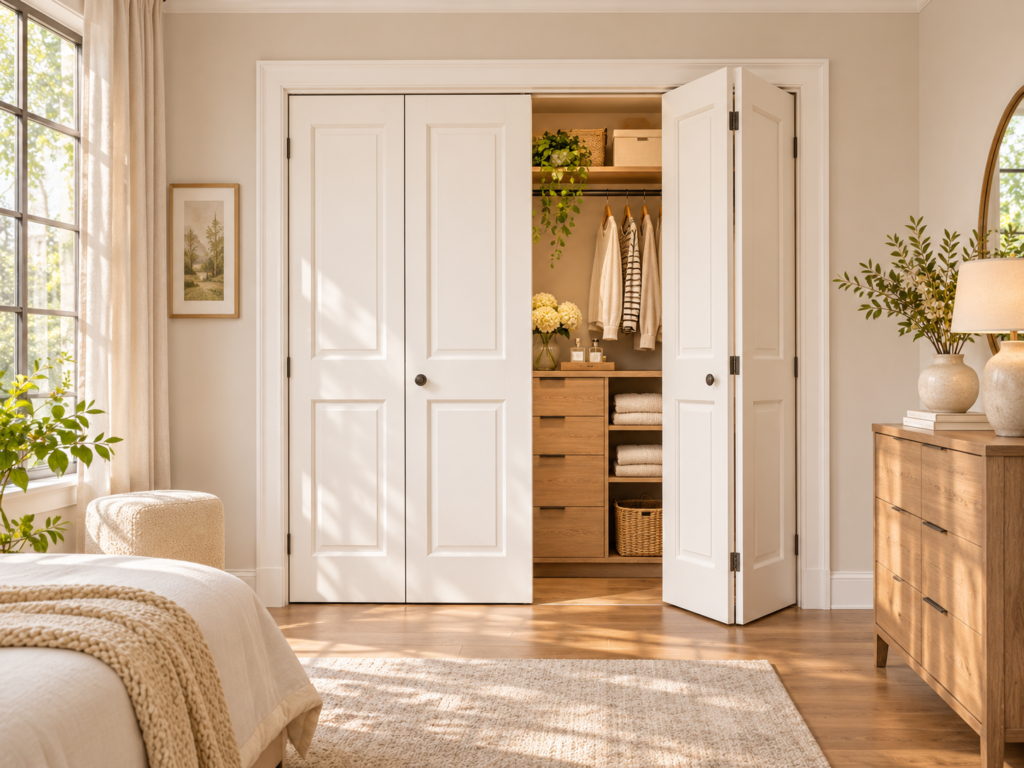
Bifold doors consist of hinged panels that fold together as they open.
They are commonly used in closets and storage areas because they provide relatively wide access without requiring the full swing clearance of conventional doors.
Modern bifold doors come in traditional panel, louvered, glass, and contemporary designs.
Best for: Bedroom closets, linen closets, and storage areas.
Why homeowners choose them: They offer a practical combination of accessibility, compact operation, and affordability.
The quality of the track system and hardware is especially important for smooth, long-term operation.
6- Flush Doors: Clean and Contemporary
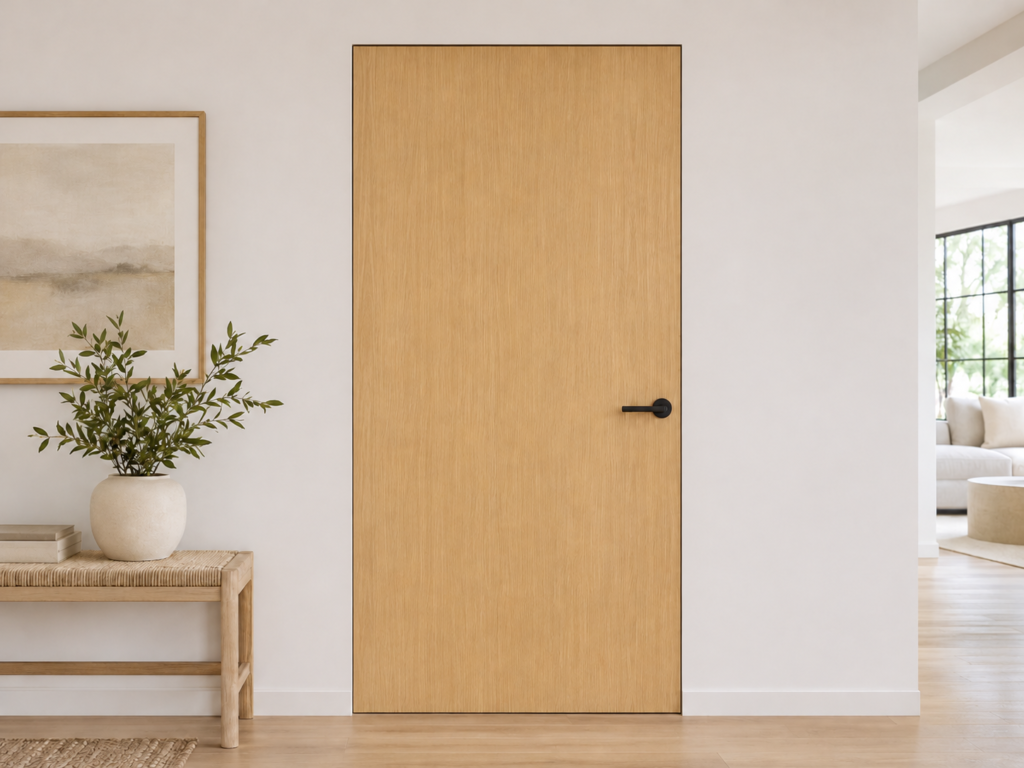
Flush doors have a completely flat surface without decorative panels or molding.
Their simplicity makes them especially appealing in modern, minimalist, and contemporary homes.
They can be painted to match surrounding walls or finished in natural wood veneers to introduce warmth and texture.
Best for: Modern bedrooms, hallways, home offices, and minimalist interiors.
Why homeowners choose them: Their streamlined appearance creates a clean architectural aesthetic without unnecessary visual details.
Flush doors are available with hollow-core and solid-core construction, allowing homeowners to balance budget, durability, and sound performance.
How to Choose the Right Interior Door for Each Room
The best interior door is not necessarily the most expensive or decorative option. It is the one that balances the room’s function, available space, and architectural style.
Before selecting a door, consider the following:
- Privacy: Bedrooms and bathrooms generally benefit from doors that close securely and provide good sound separation.
- Available space: Pocket and sliding doors can help in rooms with limited clearance.
- Natural light: French doors and glass-panel designs can make adjoining spaces feel brighter.
- Design consistency: Coordinating panel styles, door heights, casing, and hardware creates a unified appearance.
- Durability: High-traffic areas may benefit from more robust door construction and hardware.
For a whole-home renovation, selecting interior doors early in the design process can also help avoid conflicts with electrical switches, cabinetry, furniture placement, and wall framing.
Planning a Home Renovation in Northern Virginia?
PLF Design & Remodeling proudly serves homeowners throughout Northern Virginia.
Explore our services and get started at PLF Design & Remodeling